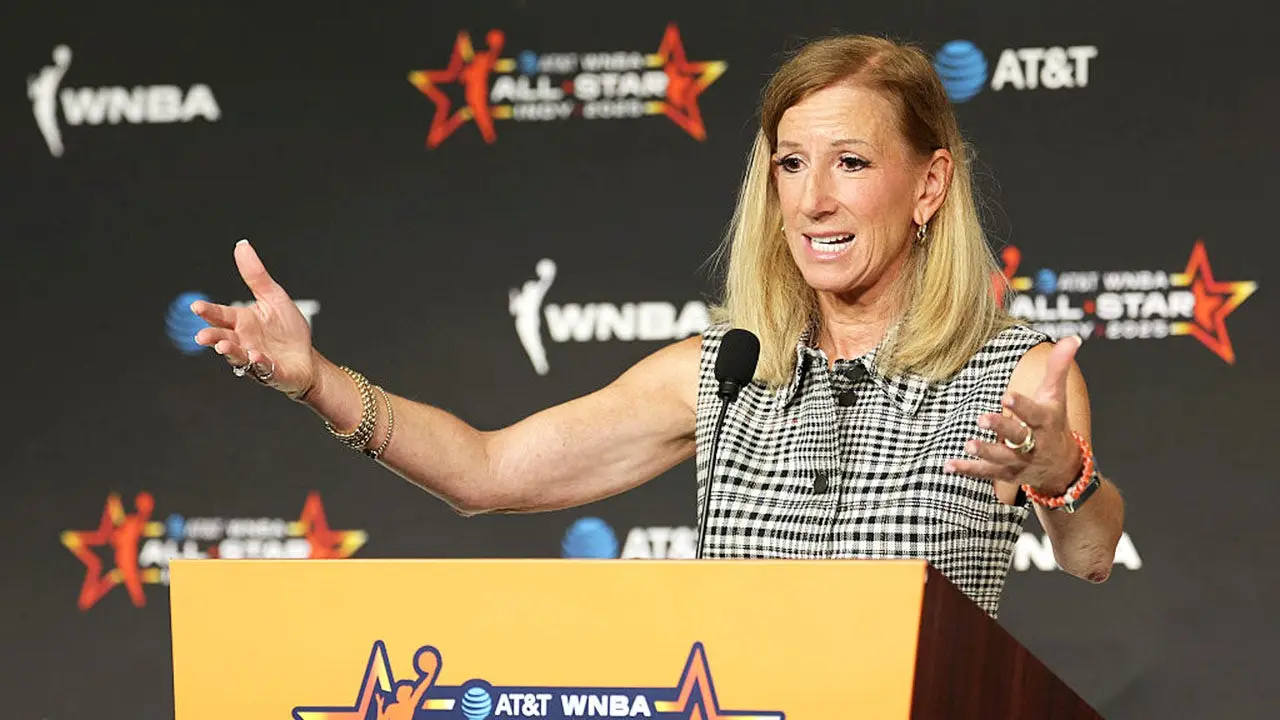
Cathy Engelbert is set to step down as commissioner of the WNBA following the 2026 season, leaving behind a legacy defined by paradoxical results. On paper, her seven year tenure represents the most explosive era of growth in the league’s history. Under her watch, the WNBA saw massive expansions in visibility, secured lucrative new media rights deals, and finally implemented league wide charter travel. Even NBA Commissioner Adam Silver praised this period as one of unprecedented scaling, yet many argue that these triumphs were driven by external forces rather than Engelbert’s own leadership.
Critics suggest that while the numbers grew, the soul of the league became fractured. Much of this friction traces back to the 2020 Wubble season, where Engelbert presided over a shift toward overt political activism. By allowing social justice slogans and partisan campaigns to take center stage on the court, critics argue she transformed the WNBA into one of the most politically divisive leagues in American sports. This alignment with left wing politics often felt forced or reactive, alienating fans seeking an escape from cultural warfare and creating an environment where athletic achievement was frequently overshadowed by ideological battles.
Beyond the political fray, Engelbert struggled to manage internal crises and protect her athletes. From the mishandling of Dearica Hamby’s pregnancy allegations to a long standing battle over charter flights that only resolved once Caitlin Clark brought enough commercial pressure to make it unavoidable, her management style often seemed hesitant. The arrival of Clark specifically highlighted a failure in governance; despite being handed a generational superstar who catapulted the league into the mainstream, Engelbert faced heavy criticism for failing to address inconsistent officiating and a culture of hostility directed toward the rookie star.
Ultimately, Engelbert may be remembered less as a visionary architect and more as a manager who rode a wave of inevitable growth while struggling to maintain stability. While she departs from a league far wealthier and more famous than the one she inherited, she leaves behind a landscape marked by tumultuous player relations and deep polarization. For many observers, her retirement marks an opportunity for the WNBA to move past its identity as a political lightning rod and refocus on the sport itself.