
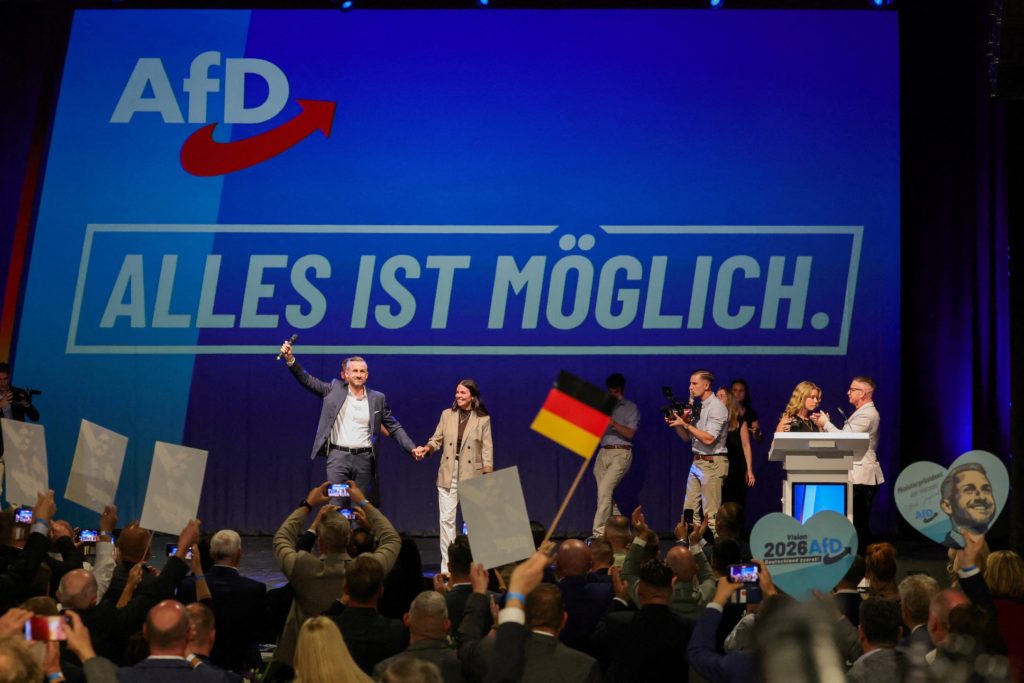
Germany is facing a deepening political fracture following a stunning parliamentary victory by the far right Alternative for Germany party, known as the AfD, in the eastern state of Saxony Anhalt. Securing forty four percent of the seats and coming within striking distance of a majority, the party has sent shockwaves through the nation’s establishment. The result represents a devastating blow to Chancellor Friedrich Merz, whose own approval ratings have plummeted to historic lows. Speaking after the vote, Merz admitted that the defeat was among the most serious his party has faced in decades, acknowledging that this moment serves as a critical turning point for the entire country.
The AfD has built its momentum on a hardline anti immigration platform, promising to close borders and aggressively deport illegal residents should they expand their influence to the national level. However, the party’s rise carries significant baggage; German intelligence agencies have previously labeled them extremists, citing rhetoric described as xenophobic and antidemocratic. Beyond border security, analysts note that the party seeks to disrupt traditional education systems by shifting focus away from the legacy of the Nazi era and aims to curb the influence of public broadcasters. Their foreign policy goals are equally provocative, favoring closer strategic ties with Russia and China over established Western alliances.
Experts suggest that while economic disparity between east and west Germany persists, this surge is driven less by raw data and more by a psychological feeling of abandonment among voters in former East German territories. This sentiment is compounded by a broader anxiety regarding rapid societal changes and global shocks involving artificial intelligence and international trade tensions. By tapping into this sense of instability, the AfD has managed to break through what was long considered an impenetrable firewall against extremist politics in German governance.
The repercussions of this electoral shift are already echoing across European capitals. Spanish Prime Minister Pedro Sanchez warned that the results serve as a grim confirmation that far right movements are gaining ground globally, often aided by a perceived surrender from traditional conservative parties. While some international figures have viewed the win with concern, others have signaled support; Former U.S. President Donald Trump highlighted the victory on social media, reflecting a growing transatlantic alignment between populist right wing movements that challenge old democratic norms.