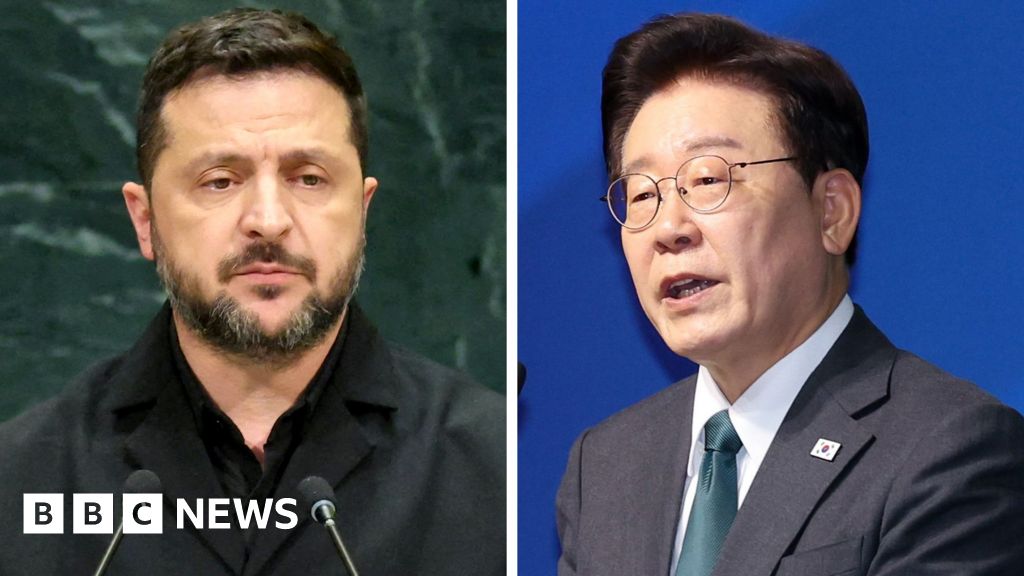
Tensions have flared between Seoul and Kyiv after South Korea summoned Ukraine’s acting ambassador following a public announcement by President Volodymyr Zelensky regarding the transfer of captured North Korean soldiers. Vice Foreign Minister Park Yoon joo lodged a formal complaint with Andrii Vieshkin, expressing strong regret that the details of the operation were revealed. While Seoul confirmed that two North Korean prisoners of war had indeed been moved to South Korea, officials insist the arrangement was meant to be strictly confidential for reasons of national security and the safety of the soldiers’ families.
President Lee Jae Myung described the disclosure as greatly disappointing, noting that the sensitivity of the matter had been clearly communicated. According to Lee’s office, there was an understanding that while the soldiers might be mentioned in Zelensky’s address at the UN General Assembly, the specific fact of their transfer would remain hidden. This secrecy was reportedly intended to protect those involved and prevent accusations that Ukraine had missed a chance to swap the captives for Ukrainian prisoners held elsewhere. However, the situation worsened when Zelensky’s office claimed no such non-disclosure agreement existed, leading Seoul to demand an apology for what it termed a falsehood.
The diplomatic rift comes at a precarious time for President Lee, who is facing domestic backlash from political opponents accusing him of attempting to cover up the transfer to avoid upsetting Pyongyang. As Lee continues to seek ways to reopen peace talks with North Korea, he must balance these goals against growing pressure from Ukraine. Kyiv has recently intensified its calls for South Korea to provide advanced anti air missiles now that North Korean troops are actively fighting alongside Russia on Ukrainian soil.
Despite offering a hundred million dollar assistance package consisting of non lethal gear like helmets and medical supplies, South Korea remains hesitant to provide lethal weaponry due to its long standing policy against arming parties in active conflicts. This caution is further complicated by warnings from Moscow, which has threatened retaliation should Seoul ship arms to Kyiv. For South Korea, the dilemma represents a difficult tightrope walk between supporting a democratic ally under attack and maintaining critical diplomatic channels with Russia and China to manage stability on its own peninsula.