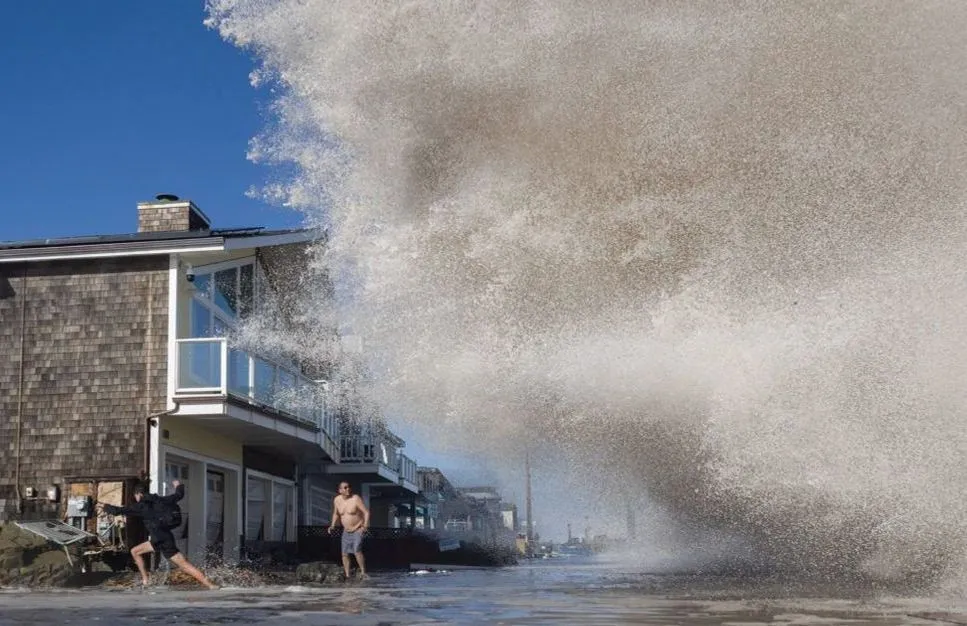
For residents of many coastal towns, the arrival of a king tide used to be a rare annual event, a curiosity of nature where the ocean briefly reclaimed the shoreline. However, these exceptionally high tides are becoming less of a novelty and more of a crisis. While the term itself is colloquial rather than scientific, it describes those peak moments in the yearly cycle when the gravitational pull of the sun and moon align perfectly with Earth to push water levels to their absolute limit. Recently, this phenomenon has been amplified by a powerful El Nino cycle, which has elevated baseline water levels across both coasts and turned manageable tides into disruptive floods.
According to oceanographer Alec Bogdanoff, the mechanics of these tides are complex and vary by location, but the result is increasingly predictable. When sea levels are already pushed higher due to climate change—driven by melting glaciers and warming oceans—even a standard king tide can overwhelm local infrastructure. Many cities find that their stormwater systems simply stop working because the drains were designed for lower sea levels; instead of carrying rainwater away from streets, the pipes effectively allow the ocean to flow backward into neighborhoods.
The recent impact has been particularly severe in California, where several locations recently hit all-time record water levels just as holiday travel began. Experts warn that while events like El Nino are natural cycles, the underlying rise in sea level is not. There is a growing concern among scientists that today’s extreme king tides are merely a preview of what daily life will look like by the 2030s. Some environmental projections even suggest that what we currently consider an exceptional flood event will eventually become the standard everyday tide.
Facing this reality, coastal communities are beginning to rethink how they build and live. Through initiatives like Florida’s resilience programs, engineers are exploring drastic measures such as elevating roads, installing massive pump systems to replace gravity-based drainage, and creating green spaces specifically designed to absorb excess surges. It is a slow process of adaptation that requires rethinking urban planning entirely. As Bogdanoff notes, while it may be impossible to solve every problem immediately, the goal is to ensure each single piece of infrastructure built today is smarter than what came before it.