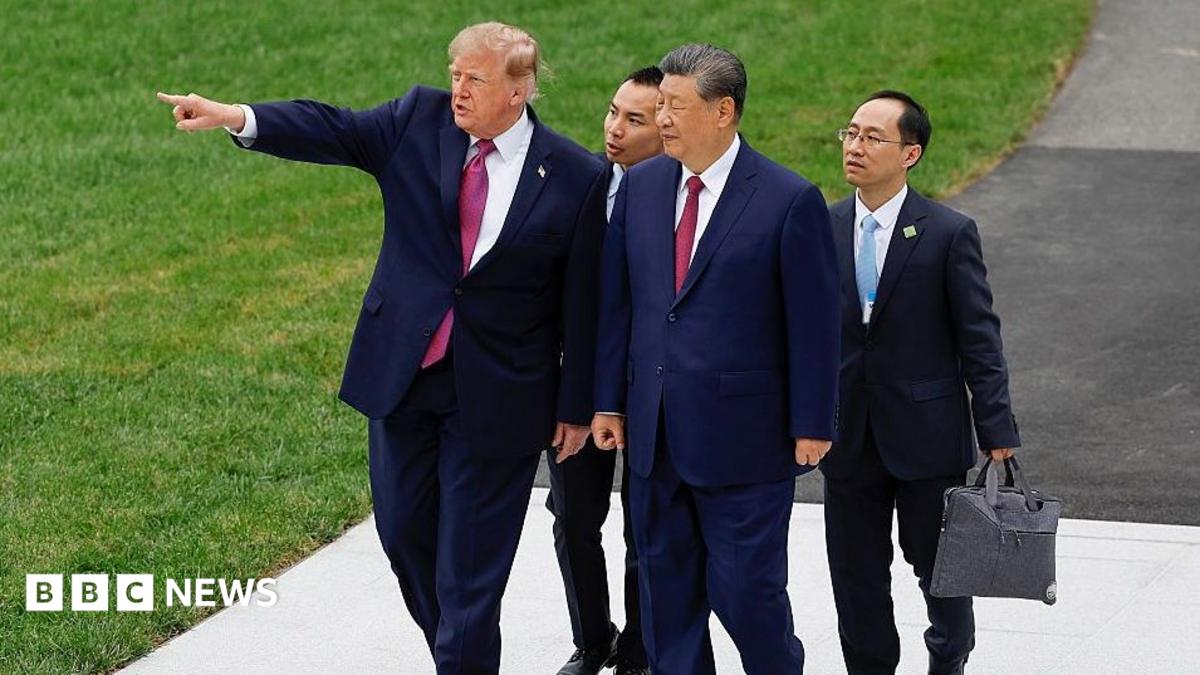
President Donald Trump described his meeting with Chinese President Xi Jinping as great following a day defined by immense spectacle and high stakes at the White House. The visit was marked by all the traditional trappings of diplomacy, featuring red carpets, military bands, and a celebratory flyover. As part of the hospitality, Trump personally escorted the Chinese leader across the White House grounds and onto the Marine One helicopter, signaling a desire to build upon the personal rapport established during his previous trip to Beijing in May.
However, beneath the layers of diplomatic pomp, analysts suggest that few meaningful breakthroughs were achieved regarding the deep seated tensions between the two global powers. Critical issues remained on the table, including a precarious trade war truce currently extended through January and long standing disputes over Taiwan. There was also significant focus on artificial intelligence; while several top American tech executives were invited to an elaborate state dinner, it remains unclear if the two superpowers can find common ground on regulating AI safety amidst their intense technological rivalry.
While the leaders talked strategy inside the Oval Office, First Lady Melania Trump and Peng Liyuan spent time together touring the Smithsonian’s National Museum of Asian Art. Outside those private circles, however, the atmosphere was far less harmonious. The event sparked frustration among members of the press corps due to heavily restricted access to official meetings. Chaos erupted in the briefing room as journalists scrambled for glimpses of the encounter, adding further tension to an already volatile relationship between the administration and several news organizations that had recently faced bans from White House grounds.
The visit also drew sharp criticism from political opponents back home. Senate Minority Leader Chuck Schumer took to the floor to accuse President Trump of showing an undue affinity for authoritarian leaders. Schumer argued that greeting figures like Xi Jinping and Vladimir Putin with such lavish welcomes reflects an atavistic attraction to dictators rather than a strategic pursuit of American interests. Despite these domestic clashes and geopolitical frictions, both presidents maintained a facade of cooperation as they transitioned from formal talks toward evening festivities.